
Levels of Lies
Different Ways That Writers, Journalists and Creators Burn Their Credibility


Credibility means everything to a journalist. It’s one of the first things that you’re told in journalism school, or at least it was for me. And it makes sense: if the audience doesn’t believe what you’re telling them, then nothing that you say really matters.
Throughout my career, I have always valued my credibility. I still have the occasional nightmare about a time in 2010 in Pocatello, Idaho, when Pocatello High School had a quarterback named Jake Jardine. The year before, Twin Falls High School had an all-star basketball player named Marcus Jardine, who had crushed Pocatello multiple times, leading to me writing his name in several stories. And for the first couple games of Pocatello’s football season, muscle memory took over in the face of tight deadlines, and I called the quarterback Marcus.
In practice, that’s a really small mistake. And it was made honestly. That’s obvious, given that it’s now been almost 16 years and it still haunts me. But even the smallest mistake can torch your credibility, even when it’s made honestly. That’s why the best journalists strive to get it right and apologize when they don’t.
Then you have the other end of the spectrum: where writers get it wrong and don’t care. Sometimes, they don’t bother to check themselves. Sometimes, they leave out information that doesn’t fit their narrative. Sometimes, they intentionally twist the narrative to push what they want.
I’m going to touch on all three in this piece and how they can destroy credibility.
Before I do, you might have noticed I’ve been away for five months. Relocation and trying to manage multiple jobs can do that to a person. It’s why I’ve not made any attempt to monetize this page; I won’t ever try do that unless I’m 100% sure I can provide consistent, genuine value for that. Hopefully, I’ll be able to produce here more often.
Level 1: Lying By Laziness
John Feinstein was one of the biggest names in sports journalism. He’s responsible for some of the most detailed books regarding sports, including A Season On the Brink and A March to Madness. In both books, Feinstein takes the reader into the locker rooms of some of college basketball’s biggest programs, such as Indiana in Season On the Brink and Duke and Virginia in March to Madness.
Both offer detailed portraits of the coaches and teams included in the book. And while I was growing up, these were some of my favorite reads. But in 2016, Feinstein published a book called The Legends Club, which focused on the three programs of the Research Triangle: Duke, North Carolina and N.C. State. Specifically, it focused on the schools’ coaches, Mike Krzyzewski, Dean Smith and Jim Valvano.
And while detailed as usual, two sections of that book changed everything for me.
(Full disclosure: I don’t have the books in front of me, so I might not have the exact quotes accurate. Given what I’m about to write, that’s important to specify.)
The first came when Feinstein was reviewing Duke’s 1986 season. Feinstein hadn’t spent much of the 1986 season around Duke, as that was the year he spent with Bob Knight and Indiana writing Season On the Brink. While Indiana flamed out against Cleveland State, Duke made it to the national championship game, losing 72-69 to Louisville. And it’s here where Feinstein got himself into trouble.
Feinstein describes the final minute of the game, with the Blue Devils trailing the Cardinals by a point. He lays out the scene of Duke playing fine defense for 45 seconds, then Louisville’s Jeff Hall putting up an air ball, which Pervis Ellison grabbed and put home for a 68-65 lead. And Feinstein makes a critical error, claiming that the basket had only counted because Hall had released the shot before the shot clock expired. He then adds that “under today’s rules, where the ball must hit the rim, Louisville would have been guilty of a shot clock violation.”
Nope.
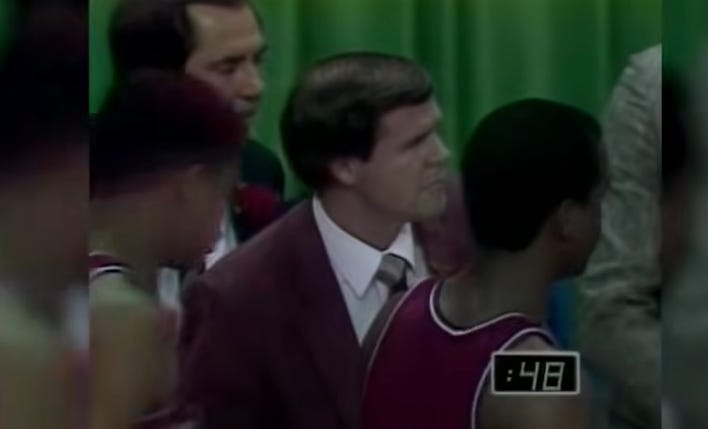

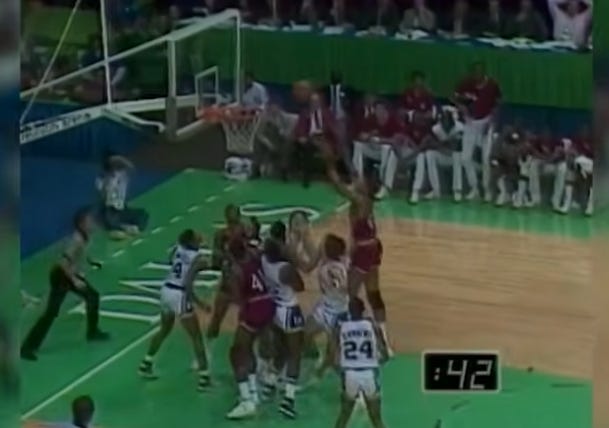
If you actually go back and watch the game, Hall’s air ball leaves his hands with seven seconds remaining on the shot clock. Ellison releases two seconds later and puts the basket home a second later. Even under today’s rules, Louisville’s basket is good with four seconds to spare.
The only way Feinstein could have been correct is if he’d been referring to the fact that the shot clock was reduced to 35 and then 30 seconds since 1986. But that brings its own set of problems. Obviously, Louisville coach Denny Crum would have called timeout much earlier if he’d been working with a shorter shot clock. So that doesn’t work.
The only explanation here is that Feinstein didn’t go back and watch the game. He relied on his memory of a game played 30 years earlier. And that’s a dangerous trap. Human memory is fallible, and Feinstein’s recollection shows it. It also shows how the eras had changed. Twenty years earlier, it wouldn’t have been possible to go back and fact-check him with the video. Now, it’s easy to pull up the video and see what really happened.
That’s a lie by laziness. I don’t believe Feinstein intended to get the facts wrong. Even though he’s writing from a Duke perspective, it doesn’t add much over what really happened. Feinstein easily could have said something like, “But the short shot found Ellison in perfect position to put it home, and Duke had to scramble. The Blue Devils never got even again,” without losing anything. But he went with his memory, and it failed him.
The second instance in the book came when discussing Rick Barnes and the 1997 season. Here, Barnes was the coach of Clemson, taking his team to play at North Carolina. After getting serenaded by boos from the Tar Heel fans, Barnes asked his security guard if the fans hated him. When the guard answered yes, Barnes followed with another question: did the Tar Heel fans hate him as much as they hated Duke coach Mike Krzyzewski?
According to The Legends Club, the guard responded along the lines of, “No, Coach, it’s not even close.”
That quote stuck out to me, because it didn’t sound right. I remembered that conversation from March to Madness, and I knew that hadn’t been the guard’s answer. I looked and I was right: the answer in 1997 was, “No, Coach, they don’t. But you’re getting close.”
Those are wildly different meanings, but again, it seems that Feinstein’s memory is the problem here. It does make his anecdote stronger if what he has were what really happened, but it seems more plausible he’s simply gotten his facts wrong.
However, it makes the rest of his work hard to read, because he’s established himself as an untrustworthy source. Even in conversations he was privy to (he’d gotten that story from talking to Barnes himself), he tells two different versions of the same story. It calls everything he writes into question, and it almost certainly wasn’t his intention to gain anything from it.
It’s why it’s so important to check and double check anything you write. If you don’t have your facts correct and the readers know it, it takes a lot for you to regain their trust. If you make that error more than once, they might never trust you again.
I know that’s now the case with me regarding Feinstein’s work. Whenever I look at something he wrote about a game and want to reference it, I know that I need to go back and actually find the game and watch it myself. And that’s because I can no longer trust his words to accurately describe what happened. For a journalist, that is devastating.
Level 2: Lying By Omission
If you’ve never heard the name Lee Strobel, I apologize for ruining that blissful period of your life. Strobel is one of the main names that evangelicals use to try to convert people to Christianity, as he’s written several books claiming to present an honest and unbiased examination of whether Christianity is true. I’ve read one such book, The Case for Christ.
You might have noticed that I linked to all three of Feinstein’s books in the previous section. That’s because, even though Feinstein’s credibility is flawed, his writing is still pretty enjoyable. I’m not going to do that here, because I don’t want to inflict this book on anyone. It’s a truly unpleasant read with a grating style of writing. If you’re really interested in what it says, I recommend the YouTube series “An Atheist Reads The Case For Christ” by Steve Shives.
Anyway, Strobel presents himself as a hard-nosed reporter who was an atheist before he attempted to disprove his wife’s Christian faith and ended up converting himself. It’s a backstory that’s meant to increase his credibility with his Christian audience, as this is exactly what evangelicals want to believe. Evangelicals love to think that people who don’t believe are just waiting for someone to convince them of the truth of their faith, and they’re doing the work of their god by sharing their bible with as many people as they can.
But there’s a massive problem with the story. The way that Strobel lays out The Case for Christ makes clear that it isn’t truthful.
This is a lie by omission, because in Strobel’s so-called attempt to disprove his wife’s faith, he doesn’t talk to a single person who could actually help him do that. Over the course of the book, he speaks to 13 people. None of them are non-Christians. He doesn’t speak to any Jews, Muslims, Buddhists, Hindus, Sikhs, agnostics, atheists or even Christian skeptics.
Nowhere is this more evident than in his chapter, “The Rebuttal Evidence”. It’s supposed to be a chapter giving the opposite perspective, which is odd off the bat because Strobel has presented himself as providing the opposite perspective. Yet the chapter is about the Jesus Seminar, a group in the 1980s and 1990s that tried to parse through the gospels and determine what Jesus said and did and what parts almost certainly didn’t happen.
Strobel spends this chapter talking to one of the Jesus Seminar’s biggest critics, Greg Boyd. But he never interviews anyone connected with the Jesus Seminar. An honest writer would have interviewed its leader John Dominic Crossan, or another member of the Jesus Seminar. This hypothetical writer then would have allowed both sides to lay out their case and asked the reader to decide for themselves which one — or neither — they found more convincing. Strobel just lets Boyd speak for the Jesus Seminar without ever giving Crossan or anyone else a chance to speak for themselves.
This goes beyond Feinstein’s level of lying. Strobel is intentionally omitting evidence from one side. It’s similar to a grand jury, where only the prosecution gets to speak. That’s why it’s said that a skilled attorney could get a grand jury to indict a ham sandwich: the defense never gets to speak. Strobel lays out what he claims is a case for Christ’s divinity, but he never presents any case against, or even lets anyone who doesn’t accept that claim speak.
When read that way, Strobel instead comes off as someone who had the conclusion that he wanted in mind, and worked backwards from there. That’s not the perspective of an atheist coming to religion; it’s the perspective of a hardcore Christian making up a backstory. It’s not honest writing, and it doesn’t hold any credibility. And with that background in place, the claims Strobel tries to make end up doing the exact opposite, shoving people away from religion.
Level 3: Lying By Intention

If you’ve paid any attention to the media landscape since Donald Trump’s election in 2024, you’ve probably noticed how legacy media has completely capitulated to Republicans’ whims. If any other president had behaved the way Trump did in his interview with Kristin Welker, every media outlet would be calling for their removal from office.
Welker’s questions weren’t even that hard-hitting. But Trump is such a narcissist and so used to his bubble that even the smallest pushback was enough to send him into a hissy fit. And even with that, media outlets are still mostly letting Trump do whatever he wants.
And that brings me to Bari Weiss, CBS and Scott Pelley.
CBS has been the most egregious in its capitulation to Trump. It has dismantled its news division, destroyed its credibility and spiked stories that were unfavorable to Trump. Several journalists have either walked away or been forced out, with Scott Pelley being one of the most recent. And now that he has nothing to lose, he’s letting Bari Weiss have it for how she has ruined a once-proud institution.
Understand, CBS has a long history of real journalism. Between Edward R. Murrow, Walter Cronkite and Dan Rather, CBS had long placed credibility and ethics first. 60 Minutes had long been one of the staples of American journalism, uncovering some of the deeper elements of corruption and other issues in the nation.
That has all changed, as the Ellisons inserted Bari Weiss to intentionally ruin CBS. She’s done this by basically trying to paint Trump and his toadies in the best light she possibly can, even when no justification exists.
And Scott Pelley is going full whistleblower on Weiss’ tactics.
Now, I have some problems with Pelley’s priorities. In the piece linked, Pelley says, “The bigger problem, frankly, is not any kind of political influence. The problem was the incompetence. You don’t break a deadline.” While incompetence is certainly a problem and deadlines are vital, I have to push back here. If your credibility is at stake, you sacrifice the deadline. It is far better to push a piece back a day, or even kill it entirely, if you can’t verify the facts. So to me, the political influence of Trump and his administration on Weiss and CBS is the bigger problem. The incompetence is problem no. 2.
But if his claims are accurate, Pelley is absolutely right to call out Weiss’ false portrayal of Renee Good’s murder. She allegedly said that CBS anchors needed to describe Good as driving toward Jonathan Ross, when the video showed no such thing. Weiss allegedly also asked if there was any way to make the protestors look more violent.
That’s the worst kind of a lie: intentionally presenting what isn’t true. Weiss’ framing of what happened to Renee Good was and is utterly false, and the video from her own network proved it. But that didn’t stop her from allegedly issuing that edict, nor did it stop MAGA supporters from smearing Good’s name and falsely claiming she had driven toward an officer.
With Feinstein, there was plenty of reason for the benefit of the doubt. With Strobel, there wasn’t much reason for the benefit of the doubt, but he was at least accurately presenting the side he favored (whether it was accurate itself is another matter). In Weiss’ case, she and CBS are straight-up lying about what’s happening, well aware that they’re lying and hoping Americans will go with it.
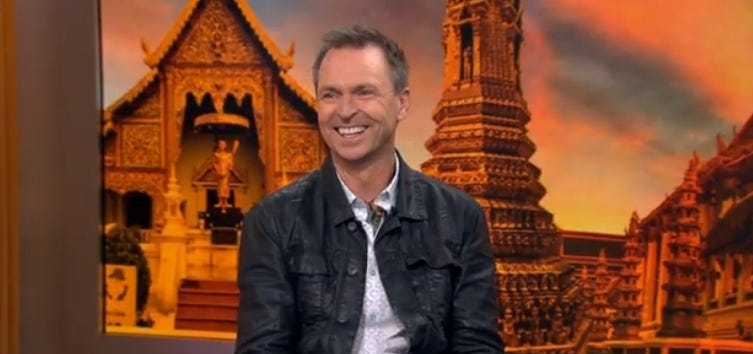
Fortunately, the public isn’t buying. CBS’ ratings continue to drop, as 60 Minutes and the Evening News aren’t even shells of themselves anymore. At this point, the only thing CBS is good for is basketball and the Amazing Race.
Pushing Back On the Lies
The best thing we can do to push back is to call out the lies and support those who are making an honest effort. Journalism and honest content creation are hard things to do. The fact that I took five months away from this is proof of that: I couldn’t produce at a level up to my standards with all I had going on.
When you see someone unscrupulous, call it out and stop interacting with their content if they won’t change. When you see AI creation of images, don’t share them and don’t interact with that creator. When you see someone putting forth real efforts to get the facts, share their post and let them know how you felt about it.
The media landscape has forever changed, in part because institutions have chosen lies over the truth. So we'll move forward without them. The ones with something honest and informative to say are the ones who will last.